The
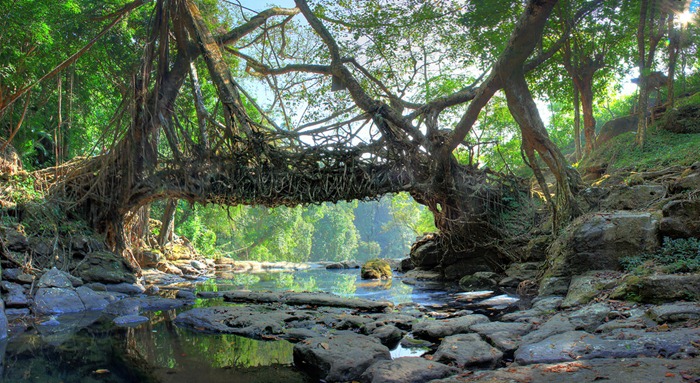
lower reaches of the southern slopes of Khasi and Jaintia hills, in Northeastern
India, are humid, warm and streaked by many swift flowing rivers and mountain
streams. On the slopes of this hill, among the dense undergrowth, a species of
Indian Rubber tree – (Ficus Elastica) - thrives and flourishes. These trees
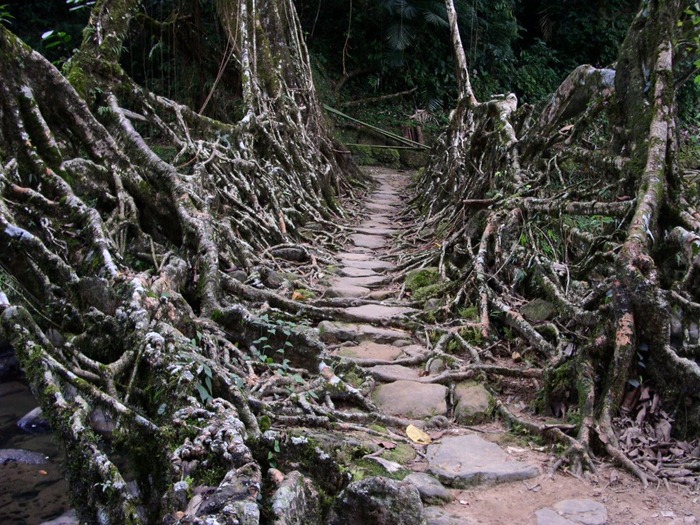
shoot out many secondary roots from their trunks. The trees, supported by these
secondary roots, can comfortably perch itself on huge boulders along side the
riverbanks or in the middle of rivers and send its roots down to the
riverbed.
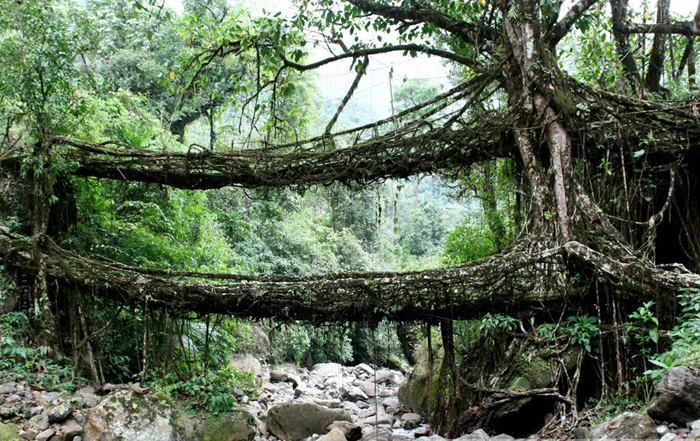
The ancient War-Khasi people, a tribe in Meghalaya, had
noticed these qualities of this tree and had adapted it to serve their need for
building bridges across rivers and streams. In order to direct the roots in the
desired direction, the Khasis sliced betel nut tree trunks half in the middle for their
entire length, hollowed them out and passed the thin and long tender roots
through them. The roots start growing towards other end of the stream and when
they are reached they are allowed to take root in the soil. Given enough time, a
sturdy, living bridge is produced. Some of these root bridges can carry fifty or more people at a time and
can be over 100 feet long. These bridges take 10 to 15 years to become fully
functional, and they keep growing in strength by the day. Some of these bridges
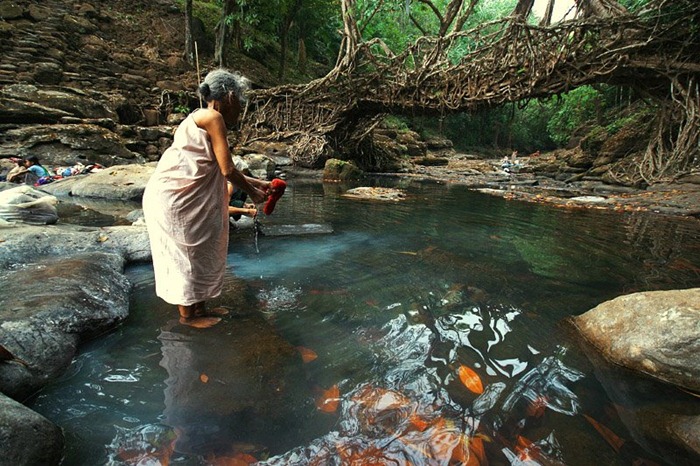
are well over 500 years old. These bridges are unique to Meghalaya only and are being used
daily even today by people living in many villages around Cherrapunjee. One
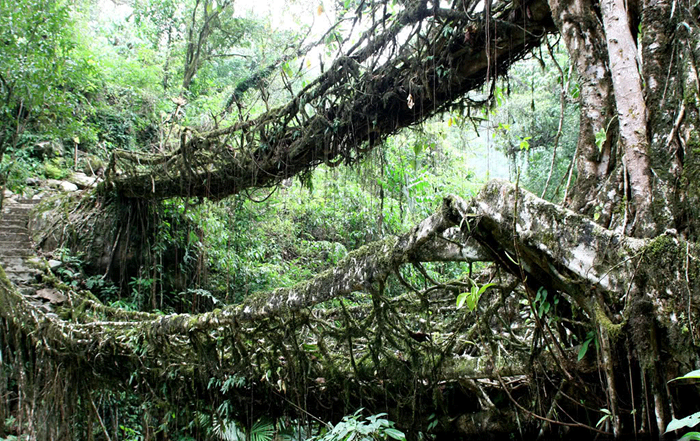
special bridge has two bridges stacked one over
the other. The villagers of Nongriat where this bridge is located at the bottom
of the valley call it 'Umshiang Double Decker Root
Bridge’.
|